
Grounded: a backyard full of creatures, recipes and jokes
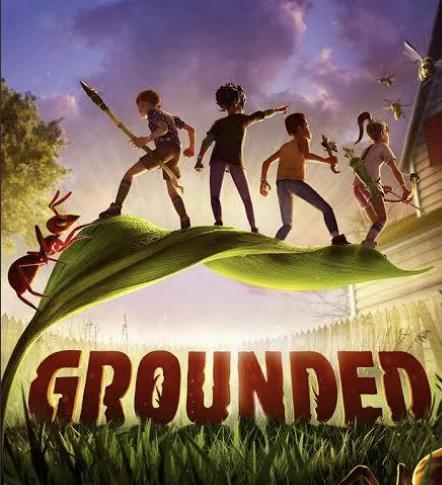
In Grounded, players are shrunk to the size of an ant and must survive in a backyard. That means dozens of creatures, hundreds of resources and crafting recipes, four very different heroes, and a playful sense of humour that has to survive the move into another language.
- Game
- Grounded
- Genre
- Survival and crafting, co-op
- Developer
- Obsidian Entertainment
- Platforms
- PC, Xbox, PlayStation, Switch
- Focus
- Glossary, humour, character voices
The kids are the size of ants
Grounded is a survival adventure by Obsidian Entertainment, published by Xbox Game Studios. Four teenagers, Max, Willow, Pete and Hoops, are shrunk to the size of an ant and must survive in a suburban backyard, alone or in co-op with friends.
They gather resources, analyze them to unlock recipes, craft tools and armour, build bases and uncover the story of a mysterious scientist, with the help of a talkative robot called BURG.L.
A small world with a very big vocabulary
Almost everything in Grounded has a name and a description: creatures, plants, resources, tools, armour, recipes and upgrades. They are linked to each other everywhere, from the crafting menu to quest texts and tips.
On top of that, the game has a warm, cheeky sense of humour, full of puns and references, and it is played by families and younger players as well as adults.
- Real species with in-game names
- Names repeated across recipes and menus
- Four heroes, four voices
- Humour for all ages
Every creature had to be right for nature lovers and fun for players.Cube Localization games team
What made it hard
Real bugs, game names
The creatures are real insects and spiders, from ants and ladybugs to orb weavers and bombardier beetles, but the game gives them its own names and personalities.
A crafting system with no room for error
Resources, recipes and upgrades reference each other; one inconsistent name and players cannot find what a recipe asks for.
Four heroes, four voices
Max, Willow, Pete and Hoops each have their own personality and way of talking, and their lines had to stay recognizable in translation.
Jokes that must land
Puns and references are part of the game's charm, and a literal translation would kill them.
Descriptions that teach
Item and creature descriptions double as survival tips, so they had to stay short, clear and useful in the interface.
One name, many places
In Grounded, a resource name appears in the world, in the inventory, in the analyzer, in recipe after recipe and in BURG.L's quests. Take Plant Fiber: it is gathered from grass, analyzed to unlock new recipes, turned into Crude Rope, and then required again and again.
If one of those places uses a different word, the player cannot connect the recipe to the item in their hands. So every name was locked in the termbase before translation, and automated checks compared every recipe and quest against it.
How we solved it
Glossary first, voices and humour next, and testing where players will read it.
- 01
A creature and resource glossary
Before translating, we mapped every creature to its real species and fixed a naming style that follows the game's guidelines.
- 02
One name, everywhere
The glossary was locked in our CAT tools, and automated checks flagged any recipe or quest that used a different name.
- 03
Character sheets
Each hero and BURG.L got a short voice profile, so every linguist wrote them the same way.
- 04
Humour, recreated
Puns and jokes were rewritten with local wordplay rather than translated literally, with alternatives offered for approval.
- 05
Limits respected
Every string was checked against its interface limit, with shorter options prepared for tight spaces.
- 06
Linguistic testing
The localized text was reviewed in context to catch truncation, overlaps and wrong references.
Keeping the fun in translation
A joke that needs explaining is no longer a joke. Our linguists treat puns and references as creative writing: they keep the intent and the tone, and find the wordplay that works in the new language.
For a game played by all ages, we also make sure every line stays friendly and appropriate for the audience.
Key decisions
The choices that kept the backyard consistent and fun.
| Our decision | Why | |
|---|---|---|
| Creature names | Accurate species, friendly wording | Players meet them as enemies; nature lovers know them as species |
| Resources | Locked names, checked in every recipe | One mismatch breaks crafting |
| BURG.L | Keep the name, translate the personality | The name is branding; the jokes are content |
| Humour | Recreate, don't translate | A joke that needs explaining is lost |
| Tone | Friendly for all ages | Families play it together |
The outcome
Consistent from recipe to recipe
The same name for the same thing, in every menu, recipe and quest.
The fun survived
Jokes and personalities that land with players in their own language.
Clean in-game text
Text checked in context, so players see what they are meant to see.
What we learned
The lessons we now apply to every project of this kind.
Build the glossary before the first sentence
In a crafting game, terminology is part of the gameplay.
Humour needs writers
Jokes are best handled by linguists who write, not just translate.
Test where players look
Menus and tooltips reveal problems a spreadsheet never shows.
Services behind this project
More case studies
All case studiesLocalization engineering
Custom tools for formats no translation software can open, automated quality checks, subtitle and audio engineering, and Arabic that works in software and games. The technical side of Cube, with a real example.
Read the case study
PUBG
A live game with constant updates, a community with its own vocabulary, dynamic text and tight screens. How we kept the language fast, consistent and true to how players talk.
Read the case study
Cyberpunk 2077
Invented slang, a hero who can be male or female, factions with their own voices, and dialogue that branches with every choice. How we kept Night City's voice and grammar right.
Read the case studySend the file. A project manager replies in thirty minutes.
A first reply within 30 minutes in office hours. On time, or refunded. A free review if you are not satisfied.