
Cyberpunk 2077: street slang, branching dialogue and a city of neon
Night City speaks its own slang, its factions each have their own voice, and the player's choices change who says what, and to whom. Cyberpunk 2077 is a huge, text-heavy RPG where tone, lore and grammar all have to hold together in every language.
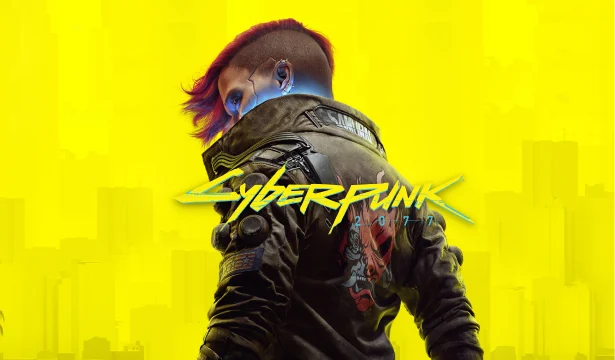
- Game
- Cyberpunk 2077
- Genre
- Open-world RPG
- Developer
- CD PROJEKT RED
- Platforms
- PC, PlayStation, Xbox
- Focus
- Slang, gender variants, dialogue
Welcome to Night City
Cyberpunk 2077 is an open-world role-playing game by CD PROJEKT RED, set in Night City, a megalopolis ruled by corporations and gangs. Players create V, a mercenary whose background, looks and choices shape the story, with the digital ghost of rockstar Johnny Silverhand, played by Keanu Reeves, as an unwelcome companion.
The world is dense with text: dialogue, quests, messages, shards of lore, ads, radio, item descriptions and skills, much of it written in a distinctive street style.
Night City, in pictures
Official screenshots from CD PROJEKT RED: a city where every sign, ad and gang has its own voice.
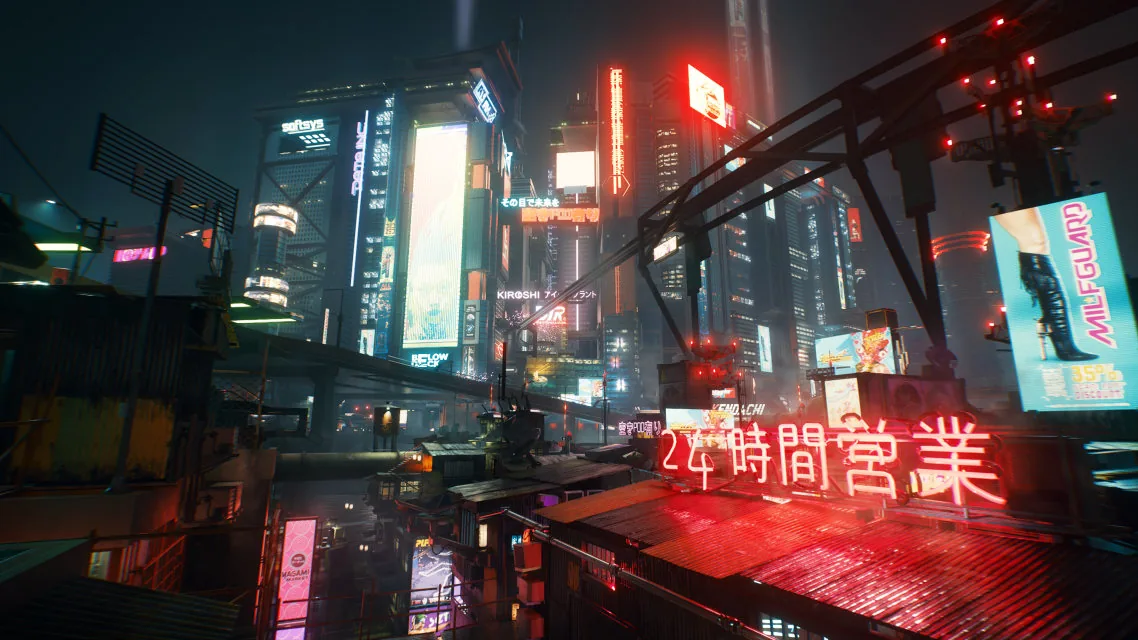
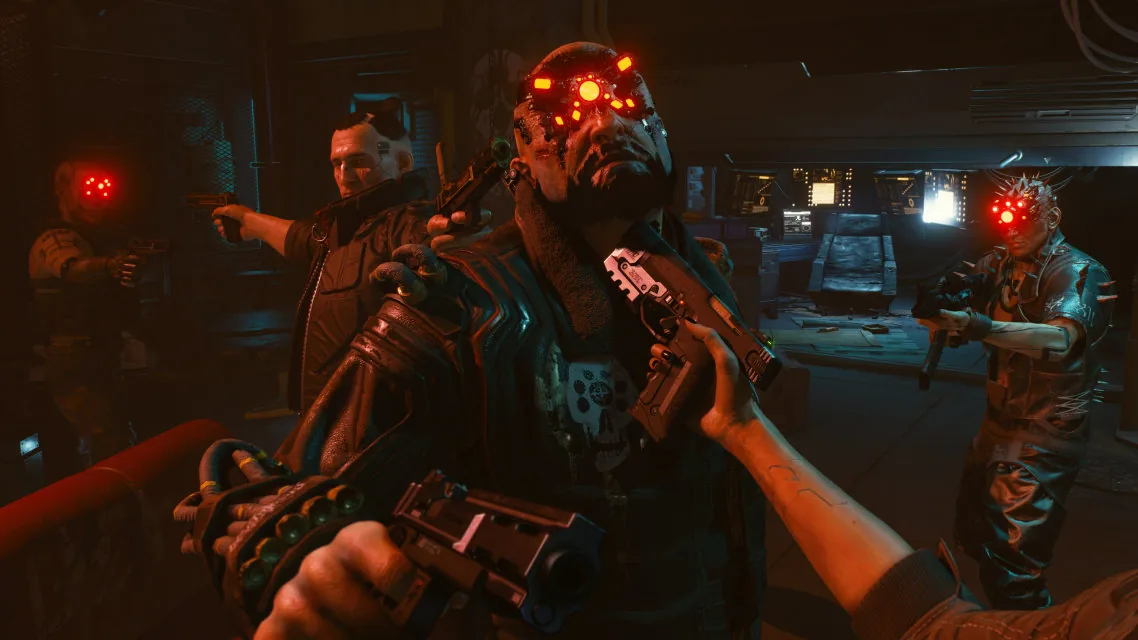
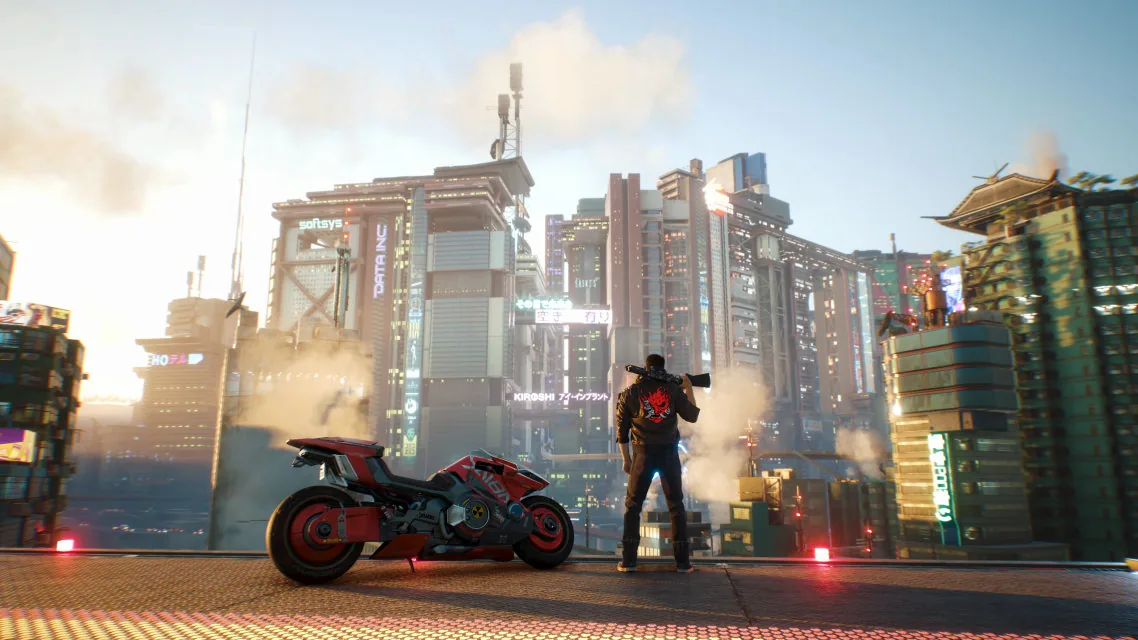
A city with its own language
Night City is built from words as much as neon: invented slang, gang and corporate names, street ads, shards full of lore, and a great many lines of dialogue. Players pick up the slang as they play, so it has to feel just as street-smart in translation and stay consistent across the whole game.
And the story is not fixed: V can be played as a man or a woman, from three different lifepaths, and dialogue branches with every choice.
What made it hard
Invented slang
Words like choom, preem and gonk have to sound like street talk in every language, and mean the same thing every time.
One hero, two grammars
V can be male or female, and many languages mark gender in verbs and adjectives, so lines addressed to V need a version for each.
Branching dialogue and lifepaths
The same line can be reached from different choices, and Nomad, Streetkid and Corpo players get their own options, so each translation has to fit every path that leads to it.
Languages inside the language
Many characters speak Spanish, Japanese or other languages, and V's cyberware translates them on screen. The translation has to keep that multilingual flavour.
Text full of code
Item stats, perks, quest updates and messages mix words with tags and variables that must never break.
One V, two grammars
In English, one line works for everyone. In Arabic, for example, the same sentence changes with the gender of the person it is addressed to, so every line spoken to V needs the right form.
We tag these lines before translation, translate each variant, and check them in context, so neither version of V ever hears the wrong grammar. A neutral wording would be easier, but in Arabic it sounds robotic.
Every faction speaks differently
A corporate email from Arasaka must never sound like a threat from a Maelstrom gang member. Our style guide describes the voice of each faction and major character, so a large team of linguists writes Night City the same way.
Names of corporations, gangs and brands stay as they are: they are part of the world's identity, and players meet them everywhere.
How we solved it
A lore bible, gender-aware translation and a safety net of automated checks.
- 01
A slang and lore bible
We built a reference for every slang term, gang, corporation and brand in Night City, with approved translations and usage notes.
- 02
Faction voices
A style guide set the tone for each faction and major character.
- 03
Gender-aware translation
Lines spoken to or by V were checked for gender variants, so the grammar is right whichever V you play.
- 04
Context for every branch
Linguists worked from dialogue context and speaker notes, and raised queries whenever a line could be read two ways.
- 05
An automated safety net
Custom checks verified tags, variables and length limits on every file.
- 06
Testing in the build
Testers played through quests to catch context errors, overlaps and inconsistencies on screen.
Key decisions
The choices that kept Night City sounding like Night City.
| Our decision | Why | |
|---|---|---|
| Slang | A fixed street equivalent for each term | Players learn it once and meet it everywhere |
| Brands and gangs | Keep names like Arasaka and Maelstrom | They are part of the world's identity |
| Foreign-language lines | Translate the on-screen text, keep the flavour | In the story, V's cyberware is doing the translating |
| V's gender | Separate variants where grammar needs them | Neutral wording sounds robotic in Arabic |
| Mature content | Keep the edge, respect the rating | The game is for adults, and the text should feel like it |
The outcome
Slang that stays consistent
Night City's vocabulary means the same thing from the first street to the last quest.
Grammar right for every V
Gender variants handled line by line, whichever character players create.
Stable text in a complex game
Tags and variables intact, and dialogue that fits every path.
What we learned
The lessons we now apply to every project of this kind.
World-building needs a bible
With this much lore, a shared reference is the only way to stay consistent across a large team.
Tag gender early
Finding gendered lines before translation is far cheaper than fixing them after testing.
Style is content
In a game this stylized, a correct but flat translation is still a wrong one.
Services behind this project
More case studies
All case studiesLocalization engineering
Custom tools for formats no translation software can open, automated quality checks, subtitle and audio engineering, and Arabic that works in software and games. The technical side of Cube, with a real example.
Read the case study
PUBG
A live game with constant updates, a community with its own vocabulary, dynamic text and tight screens. How we kept the language fast, consistent and true to how players talk.
Read the case study
Grounded
Real insects with game names, a crafting system where one wrong word breaks a recipe, four heroes with their own voices, and humour for all ages. How we kept it accurate, consistent and fun.
Read the case studySend the file. A project manager replies in thirty minutes.
A first reply within 30 minutes in office hours. On time, or refunded. A free review if you are not satisfied.