





Medical and Life Sciences Localization: Where Precision Saves Lives
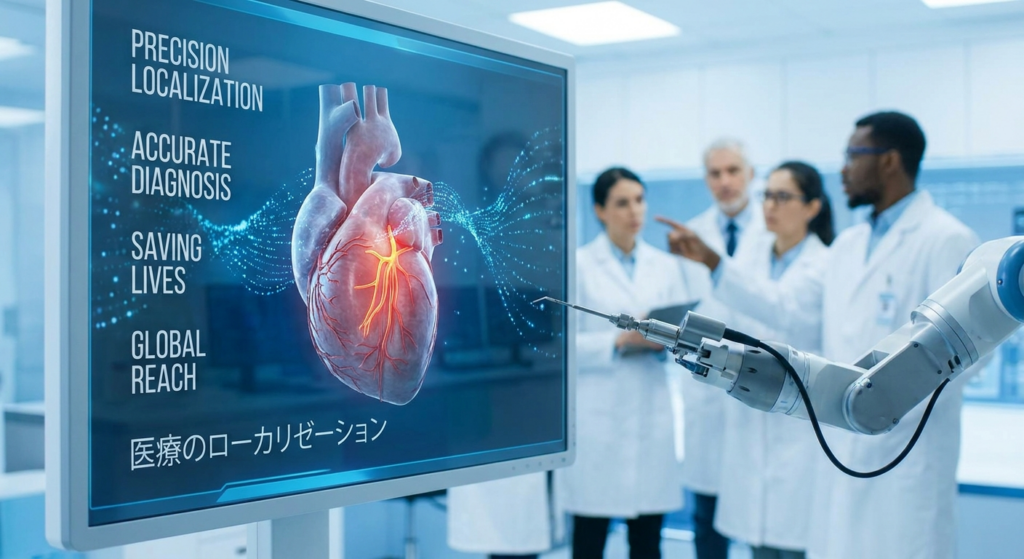
In most industries, a translation error is inconvenient, expensive, or embarrassing. In healthcare and life sciences, it can be catastrophic.
A mistranslated dosage instruction, an unclear warning in a medical device manual, or an inaccurate informed consent form can directly affect patient safety. That is why medical and life sciences localization is not just about converting words from one language to another. It is about preserving scientific meaning, clinical intent, and regulatory accuracy across languages and markets.
As healthcare providers, pharmaceutical companies, biotech firms, and medical device manufacturers expand globally, the volume of multilingual content continues to grow. Clinical trial documentation, product labeling, pharmacovigilance reports, software interfaces, patient education materials, and electronic health records all require precise localization. Technology, including AI, can help process large amounts of content faster. But when human health is on the line, speed alone is not enough. Precision is non-negotiable.
At Cube Localization, we believe medical translation must be led by subject matter experts. Our medical localization team includes linguists with strong backgrounds in medicine, pharmacology, and biotechnology, ensuring that critical content is translated with the level of care and expertise it demands.
Why Medical Localization Is Different
Medical and life sciences content is uniquely high stakes because it combines three demanding requirements:
- Technical complexity
- Regulatory scrutiny
- Direct impact on patient outcomes
A consumer marketing text can tolerate minor wording variations. A surgical device instruction cannot. A travel app may recover from awkward phrasing. A patient discharge summary may not.
Medical terminology is highly specialized, but the challenge goes beyond terminology alone. Translators must understand anatomy, physiology, pharmacology, clinical procedures, disease states, contraindications, adverse events, and the intended use of a product or treatment. They must also recognize how language affects patient comprehension, legal validity, and regulatory acceptance.
For example, the difference between “adverse event” and “side effect” may seem small to a non-specialist, but in clinical and regulatory contexts, these terms are not interchangeable. Likewise, translating “monitor” as “observe” instead of “measure regularly” could change the required clinical action.
What Falls Under Medical and Life Sciences Localization?
Medical localization covers a broad range of content types, each with its own risks and requirements.
Clinical Trial Documentation
Clinical research generates enormous amounts of documentation, including:
- Study protocols
- Investigator brochures
- Informed consent forms
- Case report forms
- Patient diaries
- Regulatory submissions
These materials must be consistent, scientifically accurate, and understandable to different audiences, from investigators and ethics committees to trial participants. Informed consent forms are especially sensitive because participants must clearly understand risks, procedures, and rights before agreeing to take part.
Medical Device Content
Medical devices require highly accurate localization for:
- Instructions for use (IFUs)
- Safety warnings
- Packaging and labels
- Maintenance guides
- User interfaces
- Training materials
A poorly localized device manual can lead to misuse, calibration errors, delayed treatment, or unsafe operation. In regulated markets, even a small discrepancy in terminology can create compliance issues.
Pharmaceutical Materials
Pharmaceutical localization often includes:
- Package inserts
- SmPCs and PILs
- Labeling
- Manufacturing documents
- Pharmacovigilance reports
- Marketing authorization content
Pharmaceutical translation must preserve dosage, administration route, contraindications, storage conditions, and adverse reaction information with absolute clarity.
Patient-Facing Healthcare Content
Healthcare providers also need localization for:
- Patient records
- Discharge instructions
- Appointment information
- Educational brochures
- Telehealth platforms
- Consent documents
In these contexts, language must be both medically accurate and accessible to patients with varying levels of health literacy.
Where AI Helps and Where It Falls Short
AI has become an increasingly useful tool in localization workflows. In medical and life sciences settings, it can support teams by:
- Processing large document volumes quickly
- Suggesting terminology matches
- Identifying repeated text
- Accelerating draft translation for low-risk content
- Supporting multilingual content management
This is particularly valuable in research environments, where time-sensitive studies and global submissions generate massive data loads.
However, AI still lacks the contextual understanding needed to handle high-risk medical content safely on its own. Medical language is full of ambiguity, domain-specific nuance, and context-dependent meaning. A term may require one translation in oncology, another in cardiology, and a different one in medical device engineering.
AI can also struggle with:
- Distinguishing between similar clinical terms
- Interpreting abbreviations correctly
- Preserving regulatory phrasing
- Understanding local medical conventions
- Adapting to target audience literacy levels
- Recognizing when literal translation creates dangerous ambiguity
For example, an AI system may produce a technically plausible translation that is still unsafe because it fails to reflect local labeling standards or common clinical usage in the target market. In a regulated environment, “close enough” is not acceptable.
That is why AI should be treated as a support tool, not a final decision-maker, for critical medical content.
Why Subject Matter Experts Are Essential
The safest medical localization workflows depend on human experts who understand both language and science.
SMEs Understand the Terminology Behind the Words
A medical SME does more than recognize terms in a glossary. They understand how those terms function in real clinical, scientific, and regulatory contexts.
For instance, a linguist with a pharmacology background can recognize when a translated dosage instruction sounds linguistically correct but pharmacologically unsafe. A translator familiar with biotechnology can identify when a term related to cell culture, assay methods, or molecular pathways is being used inaccurately.
This expertise reduces the risk of errors that a generalist translator or unsupervised AI system might miss.
SMEs Catch Contextual Meaning
Medical content often relies on context to determine the correct translation. Consider the word “lead”:
- In cardiology, it may refer to an ECG lead.
- In medical device hardware, it may refer to an electrical conductor.
- In toxicology, it may refer to the chemical element.
Without subject knowledge, the wrong choice is easy to make.
SMEs Protect Patient Safety
The ultimate purpose of medical localization is safe understanding and use. Subject matter experts know how wording affects clinical behavior. They can identify phrasing that may confuse a patient, mislead a clinician, or weaken an essential warning.
A warning that is grammatically correct but too vague can be just as dangerous as a direct mistranslation.
SMEs Support Regulatory Compliance
Medical content must often satisfy strict regional and international requirements. Subject matter experts are better equipped to maintain consistency with approved terminology, standard templates, and market-specific expectations.
This is especially important for content submitted to regulators or used in audited environments, where terminology consistency and documentation traceability matter.
Examples of How Errors Can Become Dangerous
The risks of poor medical localization are not theoretical. Small errors can have outsized consequences.
Dosage and Numeric Formatting Errors
In some countries, decimals are written with commas rather than periods. A failure to localize numeric formatting correctly can create confusion around dosage or concentration.
For example, “0.5 mg” and “5 mg” are dramatically different. Even a missing zero or separator can turn a safe instruction into a dangerous one.
Ambiguous Administration Instructions
A phrase like “take once daily” must be rendered with complete clarity. In some languages, a literal translation may sound like “take one day only” rather than “take one time per day.” That type of ambiguity can affect treatment adherence.
Informed Consent Miscommunication
Clinical trial participants need to understand risks, procedures, possible benefits, and their right to withdraw. If complex scientific information is translated into language that is either inaccurate or too confusing, consent may not be truly informed. That creates both ethical and legal problems.
Medical Device Warning Failures
Imagine a defibrillator, infusion pump, or diagnostic device with a warning that is mistranslated or softened. A user may miss a critical step, leading to malfunction or incorrect use during patient care.
These examples show why medical localization must be treated as a specialized discipline, not a routine translation task.
Regulatory Compliance Is Part of Accuracy
In medical and life sciences localization, accuracy includes regulatory accuracy.
Different markets may require specific terminology, label formats, safety phrasing, and documentation structures. Companies entering new regions must align with the expectations of local health authorities, ethics committees, and industry standards.
Depending on the product and market, localization may need to account for requirements associated with:
- FDA-regulated content
- EMA submissions
- EU MDR and IVDR frameworks
- Pharmacovigilance reporting standards
- GxP environments
- ISO-related documentation practices
- Country-specific labeling and patient information rules
A translation that is scientifically accurate but non-compliant can still delay approvals, block market entry, or create legal exposure. That is why medical localization requires careful review by professionals who understand both the language and the regulatory environment.
A Safer Workflow for Medical Localization
Organizations working with medical and life sciences content need a workflow built around risk control. A strong process typically includes the following steps:
1. Content Assessment
Not all content carries the same risk. A patient safety warning requires a different level of oversight than an internal newsletter. High-risk materials should always receive expert human translation and review.
2. Specialist Translator Assignment
Content should be assigned to linguists with relevant subject matter expertise in medicine, pharmacology, biotechnology, or related fields.
3. Terminology Management
Approved glossaries, style guides, and reference materials help maintain consistency across studies, product lines, and markets.
4. Independent Review
A second qualified linguist or reviewer should verify terminology, meaning, formatting, and compliance requirements.
5. In-Country and Clinical Validation
When appropriate, native-speaking medical reviewers or local market specialists can confirm that the translation aligns with local clinical practice and regulatory expectations.
6. Quality Assurance
Final QA should check for omissions, inconsistencies, formatting issues, and numerical errors, especially in dosage, units, and warnings.
Technology can support this process, but expert human oversight remains the core safeguard.
How Cube Localization Approaches High-Stakes Medical Content
At Cube Localization, we prioritize human expertise when health and safety are on the line. Our medical localization team is made up of linguists with extensive backgrounds in medicine, pharmacology, and biotechnology. That combination of language skill and domain knowledge is essential for translating complex medical content responsibly.
We support healthcare providers, pharmaceutical companies, and life sciences organizations with localization that emphasizes:
- Accuracy in complex medical terminology
- Clear and safe communication for end users
- Consistency across multilingual documentation
- Regulatory awareness for global markets
- Quality processes designed for high-risk content
We recognize that AI and automation can improve efficiency in content-heavy environments, especially in research and development. But we also know their limits. For critical medical documents, there is no substitute for experienced professionals who understand what is truly at stake.
When companies partner with Cube Localization, they can expand into global markets with greater confidence that their medical documents meet the highest standards of precision, compliance, and patient safety.
Conclusion
Medical and life sciences localization is one of the most demanding areas of translation because the consequences of error are so serious. From clinical trials and pharmaceutical labeling to medical devices and patient-facing healthcare materials, every word matters.
AI can help manage scale, streamline workflows, and support multilingual operations. But it cannot replace the contextual judgment of subject matter experts in high-risk medical communication. When precision saves lives, human expertise is not optional.
That is why specialist medical linguists remain at the center of safe, compliant, and effective localization. And that is why Cube Localization places expert human knowledge first—so healthcare and life sciences organizations can communicate globally without compromising accuracy, trust, or patient well-being.