





The Importance of Video Game Localization for Penetrating New Global Markets
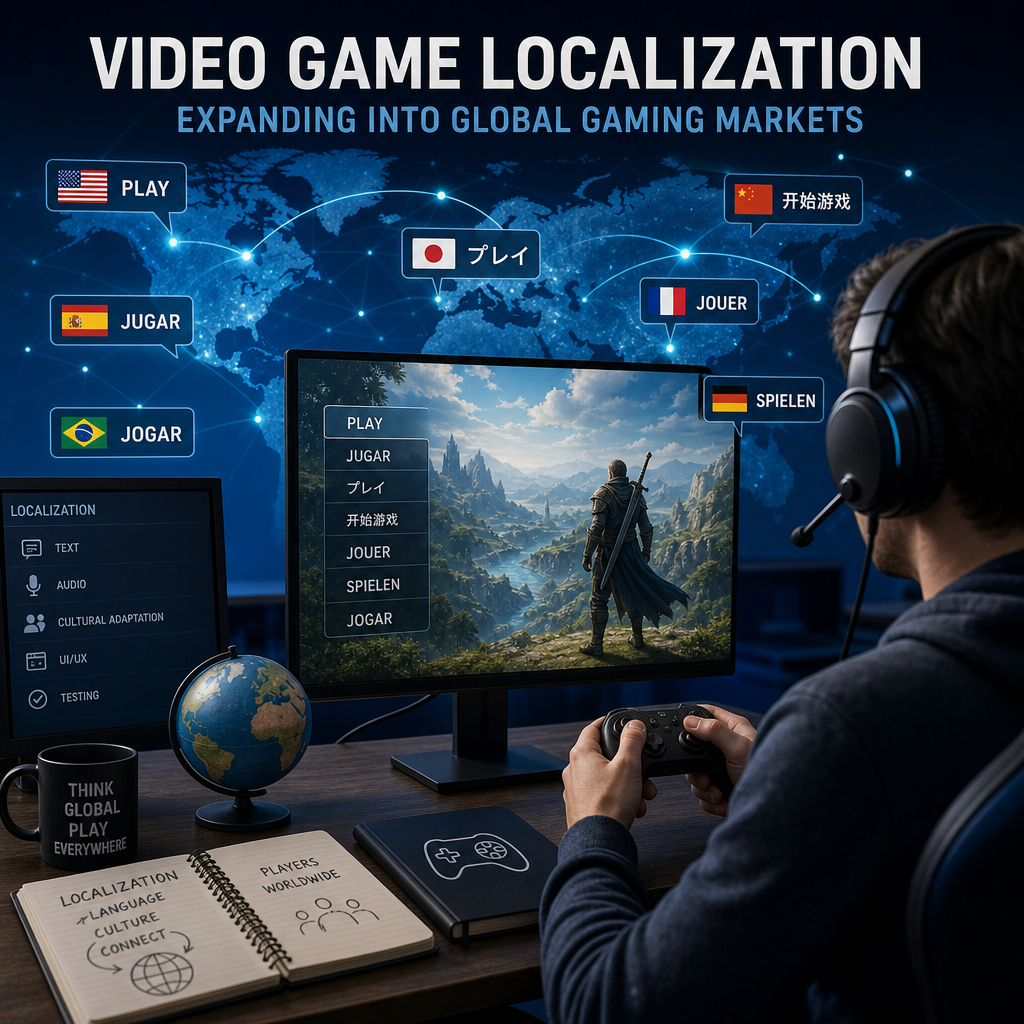
The global gaming industry is no longer limited by geography. A title launched in one country can attract players across the world within days, but reaching those players successfully takes more than simply making a game available online. To truly connect with international audiences, studios need Video Game Localization that feels natural, culturally relevant, and immersive.
For developers and publishers aiming to grow beyond domestic markets, localization is one of the smartest investments they can make. It improves the player experience, strengthens brand reputation, and opens the door to major revenue opportunities in both established and emerging regions. Whether a company wants to expand into Europe, Asia, Latin America, or the rapidly growing Arab gaming market, professional Game Localization Services can make the difference between a game that feels foreign and one that feels made for the player.
What Video Game Localization Really Means
Many people assume localization is just translation, but that is only one part of the process. Video Game Localization involves adapting a game so it matches the language, expectations, and cultural preferences of a target market.
This can include:
- Translating dialogue, menus, tutorials, and item descriptions
- Adjusting the user interface for different languages and text lengths
- Adapting humor, idioms, and references for local audiences
- Recording voice-overs that sound authentic to native players
- Modifying symbols, colors, or imagery that may carry different meanings
- Ensuring legal and cultural compliance in each market
- Testing the localized version for linguistic and functional quality
A literal translation may communicate the basic meaning of a sentence, but it often fails to deliver the same emotion, tone, or gameplay clarity. Localization focuses on preserving the intended experience, not just the words.
Why Localization Matters in a Competitive Global Market
The gaming market is crowded. Players have endless choices across mobile, PC, console, and cloud platforms. If a game feels difficult to understand or culturally disconnected, players can quickly move on to another title.
Localization matters because it helps games feel accessible and welcoming from the first interaction. When users can navigate menus easily, understand mechanics clearly, and enjoy dialogue in their own language, they are more likely to stay engaged.
Here are some key reasons localization supports market expansion:
It Increases Player Trust
Players are more likely to trust a game that speaks to them naturally. Poor translations, awkward phrasing, or inconsistent terminology can make a title look unpolished. On the other hand, high-quality localization shows professionalism and respect for the audience.
It Improves Retention and Engagement
Players stay longer when they feel immersed. Clear instructions reduce frustration, while culturally relevant content creates emotional connection. This is especially important in story-driven games, multiplayer environments, and live-service titles where ongoing engagement is essential.
It Expands Revenue Opportunities
Localization allows developers to enter markets that would otherwise remain inaccessible. By speaking directly to local audiences, studios can increase downloads, sales, in-app purchases, and long-term customer value.
It Builds Brand Loyalty
A positive localized experience creates stronger relationships with players. If users feel a company understands their culture and language, they are more likely to support future releases and recommend the brand to others.
Localization Goes Beyond Text Translation
One of the biggest mistakes developers make is treating localization as a final-stage translation task. In reality, effective localization touches nearly every part of the game experience.
User Interface Adaptation
Different languages take up different amounts of space. A button that works perfectly in English may break the layout when translated into German, Arabic, or French. This means UI elements often need to be redesigned or adjusted to maintain readability and usability.
Localization also includes:
- Text alignment
- Font compatibility
- Right-to-left language support
- Date, time, and number formatting
- Region-specific input or onboarding preferences
For example, localizing a game into Arabic requires more than changing the text. The interface may need full right-to-left adaptation to feel natural for players in Arab markets.
Cultural Context and Sensitivity
Games are full of references, symbols, jokes, and visual choices that may not carry the same meaning everywhere. What feels harmless or entertaining in one market may confuse or even offend players in another.
A well-localized game considers:
- Character names and dialogue tone
- Religious or political sensitivities
- Local social norms
- Regional entertainment preferences
- Appropriate visual and narrative adjustments
For instance, a holiday event centered on a Western cultural tradition may need to be adapted or reimagined for another market to remain relevant and engaging.
Voice-Over and Audio Localization
Voice is a powerful tool for immersion. Authentic voice-over helps characters feel believable and emotionally resonant. If the spoken dialogue sounds unnatural, the player’s connection to the story can weaken quickly.
Professional voice localization involves:
- Native-speaking voice talent
- Age- and tone-appropriate casting
- Lip-sync or timing adaptation
- Direction that preserves character personality
- Audio quality control
For narrative-heavy titles, localized voice-over can significantly enhance the user experience and increase a game’s appeal in competitive regions.
How Localization Enhances the Player Experience Worldwide
At its core, localization is about delivering a better experience. Players want to enjoy a game without feeling like outsiders. They want menus that make sense, storylines that flow naturally, and characters who sound authentic.
Consider a role-playing game entering a new region. Without proper localization, quest descriptions may be unclear, jokes may fall flat, and combat instructions may confuse new users. Even if the gameplay is excellent, friction in language and presentation can reduce enjoyment.
Now imagine the same game fully localized:
- Menus are intuitive
- Dialogue feels natural
- Tutorials are clear
- Voice acting fits the setting
- Cultural references are adapted thoughtfully
The result is a game that feels polished and welcoming. Players are more likely to recommend it, spend more time in it, and become loyal customers.
The Business Value of Professional Game Localization Services
Some studios try to cut costs by using basic translation tools or non-specialized providers. While this may seem efficient in the short term, it often leads to expensive problems later, including poor reviews, player complaints, and weak market performance.
Professional Game Localization Services offer strategic value beyond language conversion. They bring together linguistic expertise, cultural knowledge, technical understanding, and testing processes tailored specifically to games.
Better Quality Across Every Touchpoint
Games contain unique terminology, branching dialogue, UI constraints, and emotional storytelling. Professional localization teams understand these complexities and work to preserve consistency across the entire product.
Faster Entry Into New Markets
Experienced localization partners streamline workflows, manage multilingual assets, and help developers launch in multiple regions efficiently. This reduces delays and allows companies to capitalize on global demand more quickly.
Lower Risk of Market Missteps
Cultural mistakes can damage a brand and affect revenue. Professional localization reduces this risk by ensuring the game aligns with local expectations and avoids preventable errors.
Stronger Return on Investment
When players understand and enjoy a game, they are more likely to purchase, subscribe, share, and return. Localization contributes directly to monetization by making the product more accessible and engaging.
Why Emerging Markets Deserve Special Attention
While major markets such as the United States, Japan, and Western Europe remain essential, emerging regions offer some of the strongest growth potential in gaming today. Developers that move early and localize effectively can gain a major competitive advantage.
One standout example is the Arab gaming market.
The Lucrative Potential of the Arab Gaming Market
The Arab world represents a fast-growing and highly engaged gaming audience. Mobile gaming is particularly strong, but console and PC gaming communities are also expanding rapidly. Young demographics, high smartphone penetration, and increasing digital spending make the region especially attractive for publishers.
However, entering this market successfully requires more than making a game available for purchase. To connect with Arabic-speaking players, developers need culturally aware Video Game Localization that addresses both language and user experience.
Key Localization Needs for Arab Audiences
- High-quality Arabic translation
- Right-to-left UI support
- Culturally appropriate content adaptation
- Regionally relevant marketing language
- Native Arabic voice-over when suitable
- Testing for readability and usability across devices
Games that invest in these elements can stand out in a market where demand for quality localized content continues to rise. Players notice when a game truly supports their language and culture, and that recognition often leads to stronger engagement and brand loyalty.
How Cube Localization Helps Developers Localize Games for Growth
For studios looking to expand globally, working with a specialized partner is essential. Cube Localization provides professional support that helps developers Localize Games effectively for diverse international audiences.
By combining language expertise with cultural understanding and technical precision, Cube Localization helps ensure that each title feels authentic in its target market. This includes more than translating text. It means adapting UI elements, refining in-game messaging, supporting voice-over production, and checking that the final product performs well in the target region.
With professional Game Localization Services, developers can:
- Launch in new territories with confidence
- Improve user engagement from day one
- Reduce negative feedback caused by poor translation
- Increase player retention and monetization
- Build trust in emerging and high-value markets
For companies targeting regions such as the Arab gaming market, this level of support is especially valuable. A strong localization strategy can transform a game from a foreign product into a familiar, compelling experience.
Best Practices for Developers Planning Global Expansion
Studios that want to grow internationally should treat localization as a core part of development, not an afterthought. The earlier it is included, the smoother and more effective the process becomes.
Plan for Localization Early
Build flexible UI systems, prepare for text expansion, and organize content in a way that supports multilingual workflows.
Work With Native Experts
Native linguists and cultural consultants are essential for capturing tone, avoiding mistakes, and maintaining authenticity.
Test the Localized Game Thoroughly
Linguistic QA and functional testing help identify broken text, display issues, mistranslations, and usability problems before launch.
Prioritize Key Markets Strategically
Focus first on regions with strong revenue potential and audience demand. Emerging markets, especially Arabic-speaking regions, should not be overlooked.
Think Beyond Launch
Localization should continue through updates, events, downloadable content, and live-service communication to maintain consistency and player trust.
Conclusion
In a global industry where player expectations are higher than ever, Video Game Localization is not optional for studios that want meaningful international growth. It improves accessibility, deepens immersion, and helps games resonate across languages and cultures. More importantly, it supports business success by driving engagement, retention, and revenue in new territories.
Developers that invest in professional Game Localization Services are better positioned to Localize Games effectively and build lasting relationships with players around the world. With expert support from Cube Localization, studios can enter lucrative new markets, including the fast-growing Arab gaming market, with confidence and clarity. When a game feels local, players are far more likely to make it their own.